

Nobody expects to hear that their sperm count is zero.
Most men go years without even knowing there is a problem. Then one day, after months of trying to start a family, a semen test comes back with results that change everything. That word—azoospermia—suddenly becomes the most important word in the room.
If you are going through this right now, or if someone close to you is, this is written for you. No heavy medical jargon. No unnecessary fear. Just clear, honest answers about what azoospermia is, what causes it, and what can actually be done.
What Is Azoospermia?
Simply put, azoospermia means there is no sperm in the semen. Not a low number, none at all. When a man ejaculates, the fluid looks completely normal. There is nothing on the outside that gives it away. But under a microscope in a lab, there are zero sperm cells to be found.
This is what leaves most men in shock. On the surface, everything is all right. None of the pain, no apparent symptoms, no cause to think anything is amiss. But there is the diagnosis.
Approximately 1% of all men have azoospermia. In men with male infertility, the figure increases to between 10 and 15%. It is one of the more serious causes of a couple’s inability to conceive, but, and this matters, it is not always a dead end.
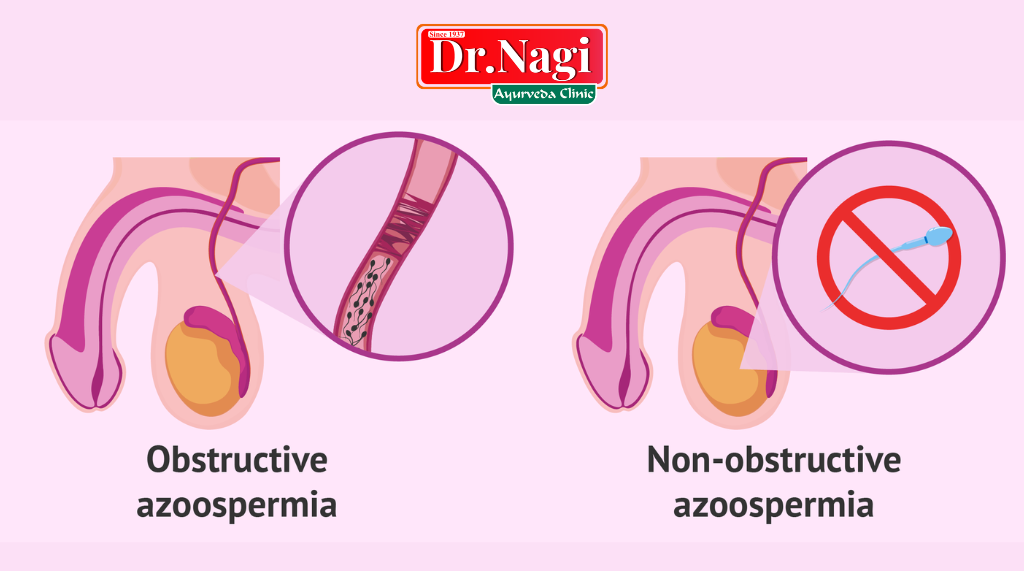
Types of Azoospermia
Not all azoospermia is the same. The types of azoospermia differ based on where the problem actually sits, and the distinction matters a lot when it comes to treatment.
1. Obstructive azoospermia:
Here, the body is actually producing sperm, the testicles are doing their job. The problem is that somewhere along the path the sperm travels, there is a blockage. It could be in the epididymis, the vas deferens, or the ejaculatory ducts.
Common causes include:
- Previous vasectomy
- Scarring from infections
- Past surgeries in the groin area
- Congenital absence of the vas deferens
2. Non-Obstructive Azoospermia
This one is different. There is no blockage, and the sperm simply is not being made, as well as is being made in such tiny amounts that none of it reaches the semen.
This could be due to:
- Testicular dysfunction
- Hormonal imbalances
- Genetic conditions
This type is more complex, but still manageable with the right approach.
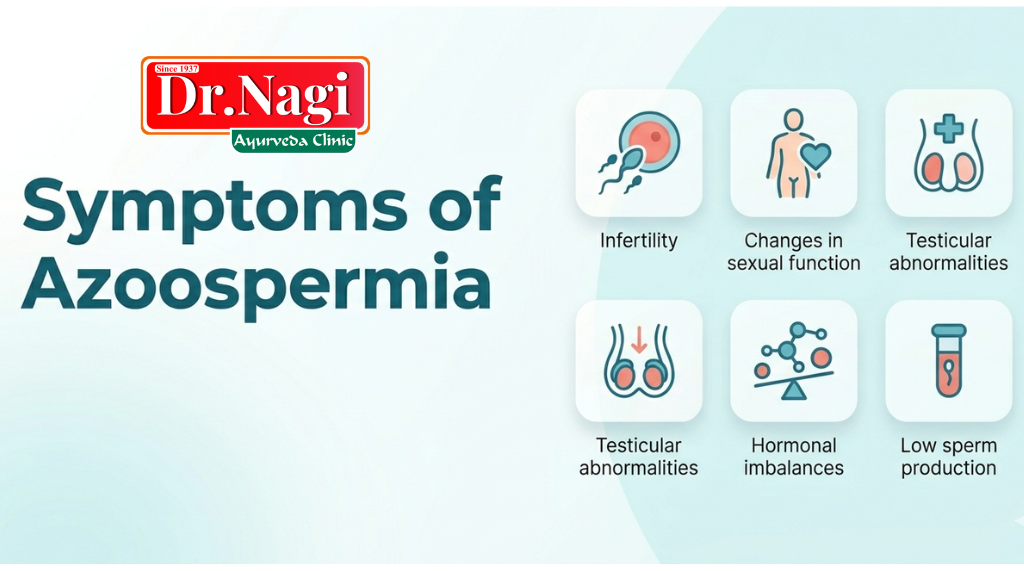
Azoospermia Symptoms
Here is the hard truth about azoospermia symptoms: there usually are none. At least none that you would notice in day-to-day life. The semen looks normal. Ejaculation feels normal. There is no discomfort, no swelling, nothing that stands out.
For most men, the first clue is simply that pregnancy is not happening despite regular unprotected sex over many months. That is what sends them to get tested.
That said, sometimes the condition causing azoospermia does show signs.
- If hormones are off, a man might notice his sex drive has dropped, along with he is having difficulty with erections.
- If there was a past infection that caused scarring, there might have been pain or swelling around the testicles at the time, though that may have gone unnoticed or been dismissed.
- In cases of genetic conditions like Klinefelter syndrome, there may be smaller-than-normal testicles, reduced body hair, or in some cases breast tissue that is slightly enlarged.
But again, in many men, there is absolutely nothing visible. Which is exactly why a semen analysis is the only way to know for sure.
Reasons for Azoospermia
There is no single reason for azoospermia. The reasons for azoospermia vary quite a bit depending on a man’s health history, and genetics, along with lifestyle. Here is a straightforward breakdown.
In the case of obstructive azoospermia, a vasectomy (purposely blocking the passage of sperm) is a common cause, as well as so is an infection (such as gonorrhea or chlamydia) that left scar tissue behind, the absence of the vas deferens at birth, previous surgeries in the groin or pelvis, in addition to even damage to the reproductive tract.
For non-obstructive azoospermia, it gets more complex. Genetic problems are a big one, and Klinefelter syndrome, along with Y chromosome microdeletions, as well as other chromosomal abnormalities directly impact how the testicles function. The chemical signals that communicate to the body to make sperm can be cut off by hormonal disorders of the pituitary gland or the hypothalamus. Another significant cause is medications, and anabolic steroids, to add to chemotherapy drugs, are all known to impair sperm production, at times permanently. There are also well-documented causes such as radiation exposure, varicocele (enlarged scrotal veins that cause temperature increase) and untreated undescended testicles (not removed in childhood).
On the lifestyle front, it can include heavy drinking, smoking, recreational drugs, and just exposing the scrotum to heat, whether in hot baths, tight underwear or sitting on a lap with a laptop, over the long term, all of these can disrupt production of sperm. These are the things men seldom relate to fertility, yet it does count.
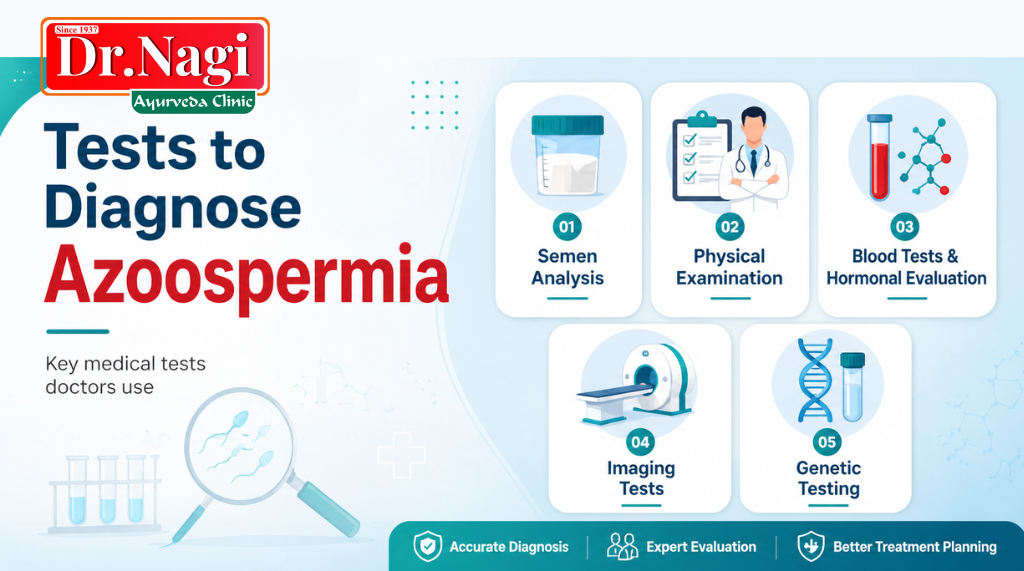
How Is Azoospermia Diagnosed?
Diagnosis begins with a semen analysis, and usually two samples on two different days, just to confirm. If both come back with no sperm, the investigation deepens.
- The test is performed by blood tests to determine the level of hormones, specifically FSH, LH, and testosterone. Examples of High FSH include a testicular issue.
- Structural problems such as varicocele and blockages can be identified in a scrotal ultrasound.
- Genetic testing can be advised to search the abnormalities in chromosomes.
- In certain instances, a small testicular tissue biopsy is also performed to test whether sperm is being produced within the testes although it is not coming to the semen, this helps differentiate between these two primary types.
If you are at this stage, seeing a male infertility specialist, a urologist or andrologist with experience in reproductive health, is genuinely important. General practitioners are helpful but this particular area needs someone who deals with it regularly.
Can Azoospermia Be Treated?
Yes, and this is what most men are interested in knowing. Is there any cure to azoospermia? The response to that is yes in most instances, be it through restoring natural sperm flow or retrieving sperm to aid in reproduction.
In the obstructive type, surgery can be the best way out. Vasectomy reversal is able to reconstruct the vas deferens and the sperm in the ejaculate. Blockages in the epididymis or ejaculatory ducts can be removed by other procedures. In cases where surgery is not possible, a fine needle can be used to directly remove sperm out of the testicle, which is known as TESA, and then inserted into IVF and ICSI.
In non-obstructive azoospermia, treatment is based on the etiology. When hormones are the problem, medication can sometimes stimulate the body to start producing sperm again. In tougher cases where sperm production is very low but not completely absent, a procedure called micro-TESE allows surgeons to look through the testicular tissue under a microscope and find pockets of sperm that can be extracted as well as used for IVF-ICSI. Results vary, but this has given many men a real chance at biological fatherhood.
The azoospermia treatment in ayurveda It takes proper diagnosis, patience, and the right specialist.

About Dr. Nagi Clinic
Dr. Nagi Clinic has been treating sexual and reproductive health concerns since 1937. That is not a number to gloss over, nearly nine decades of helping men across Punjab and Haryana with conditions that most people find too embarrassing to talk about openly.
At Dr. Nagi Clinic, the approach is simple: sexual health is a normal part of overall health, and it deserves proper attention and care. Problems like premature ejaculation, low stamina, reduced desire, phimosis, and low confidence, along with early discharge are addressed with trusted Ayurvedic treatments, not with false promises in addition to short-term fixes, but with solutions designed for complete and lasting improvement.
Privacy matters here. Safety matters. And so does the kind of experience that only comes from decades of focused, dedicated practice.
The clinic is available across five locations:
- Ambala (Head Office), House No. 781, Sector 7, Ambala City. Open every day, 9 AM to 7 PM. There is also a second location at Shop No. 128, Rai Market, Near Gandhi Ground, Ambala Cantt.
- Ludhiana, Kitchlu Nagar, Main Market, Arihant Tower, Near Punjab along with Sindh Bank. Every Tuesday, 10 AM to 4 PM.
- Mandi Gobindgarh, Opposite Balu Ram Dharamshala, Near Punjab National Bank, Railway Road. Every Wednesday, 10 AM to 4 PM.
- Patiala: Near Old Bus Stand, Opposite Nehru Park, ICICI ATM as landmark. Every Thursday, 10 AM to 4 PM.
- Yamunanagar: Hotel Pooja, Near Fountain Chowk. Every Friday, 10 AM to 4 PM.
To speak with someone or book an appointment, call 9034772282 or 9416864455.
Frequently Asked Questions (FAQs)
Is azoospermia always permanent?
No, it is not. The cause is vital to whether it is reversible or not. Hormonal-related male azoospermia is normally treated with medication. Obstructive azoospermia is frequently treated with surgery. Sperm harvesting followed by an IVF-ICSI gives a real opportunity to a number of couples to have a biological child even in those cases when natural sperm production cannot be restored completely. The faster you seek help, the more options you will probably have.
Can a man with zero sperm count still become a father?
Yes, many can. Even when no sperm appears in the ejaculate, doctors are often able to retrieve sperm directly from the testicular tissue. That retrieved sperm is then used in IVF with ICSI, where a single sperm is injected directly into an egg in a lab. It has worked for thousands of men. Getting a proper evaluation from a male infertility specialist is the first step to understanding your personal chances.
What is the difference between oligospermia and azoospermia?
Oligospermia is a condition that does not equal azoospermia, which is also a condition that impairs male fertility. Oligospermia is a condition where a man lacks sperm, only that it is insufficient (less than 15 million per milliliter). Azoospermia is when the semen contains no sperm. The more severe of the two is azoospermia but they both can be treated depending on the cause.
Does Ayurvedic treatment actually work for azoospermia?
It can, especially, in case the etiological factor is hormonal, lifestyle-related, or associated with chronic stress and malnutrition. The so-called herbs as Ashwagandha, Shilajit, and Shatavari do actually promote reproductive health, as they improve the environment in which sperm is produced, and reduce oxidative stress that harms sperm cells. Dr. Nagi Clinic has worked with these treatments for close to ninety years with a long-term, outcome-focused approach. For physical blockages or genetic causes, Ayurveda works best alongside conventional treatment.
How long before treatment shows results?
It varies by treatment type. Surgical correction for a blockage can be faster, results may be seen within weeks to a few months. Hormonal therapy usually takes three to six months because the sperm production cycle itself is about 72 days long. Ayurvedic treatment similarly works best over a course of three to six months, with consistent use in addition to lifestyle adjustments. There is no honest shortcut, but there is real, meaningful progress possible with the right approach along with enough time.
2 Responses