

No one discusses erectile dysfunction without embarrassment. Most men spend months sitting privately with it before taking any action and when they take action, the first thing they do is to visit a pharmacy.
The idea that consistent physical practice can work on the actual biology behind the problem gets skipped entirely.
Yoga for erectile dysfunction is not a soft alternative. It works on blood flow, on the nervous system, on the pelvic floor, on cortisol and testosterone, the exact systems that determine whether a man can get and hold an erection.
The difference from pharmaceutical approaches is that yoga builds something rather than borrowing against it.
The Biology Behind Why It Works
An erection is a vascular event first. Blood must be able to enter the penile tissue in an adequate volume, the vessels must be dilated enough to permit it and the pelvic floor must be able to keep the pressure around the area.
Stress blocks all three pathways at the same time, vessels constrict, and the nervous system stays in fight-or-flight, along with the pelvic floor holds tension that works against rather than with erection.
Yoga for erectile dysfunction breaks into these pathways:
- Specific postures drive circulation directly into the pelvic region
- Breathwork shifts the nervous system from sympathetic to parasympathetic, the state where blood vessels open
- Pelvic floor practices build the muscular capacity to sustain erection physically
- The cortisol reduction from consistent practice gives testosterone room to recover
Eight to twelve weeks of daily practice is the honest minimum. The process works from week one, it just takes time to accumulate into something clearly noticeable.
Paschimottanasana: How It Connects to Erectile Function
Years of sitting builds tension in the hamstrings, lower back, and pelvic floor. That tension restricts blood flow into the pelvic region chronically, without the man ever connecting the two. This posture releases exactly that.
For yoga for erectile dysfunction, pelvic opening combined with nervous system calming in one movement makes this worth daily practice regardless of flexibility level.
Steps
- Sit with both legs straight ahead and spine tall before moving
- Exhale slowly and hinge forward from the hip crease, not the lower back
- Reach toward the feet and settle where there is stretch but no strain
- Hold thirty to sixty seconds with slow breathing
- Repeat three to five times per session
How far the fold goes matters far less than keeping the spine long and the breath steady.
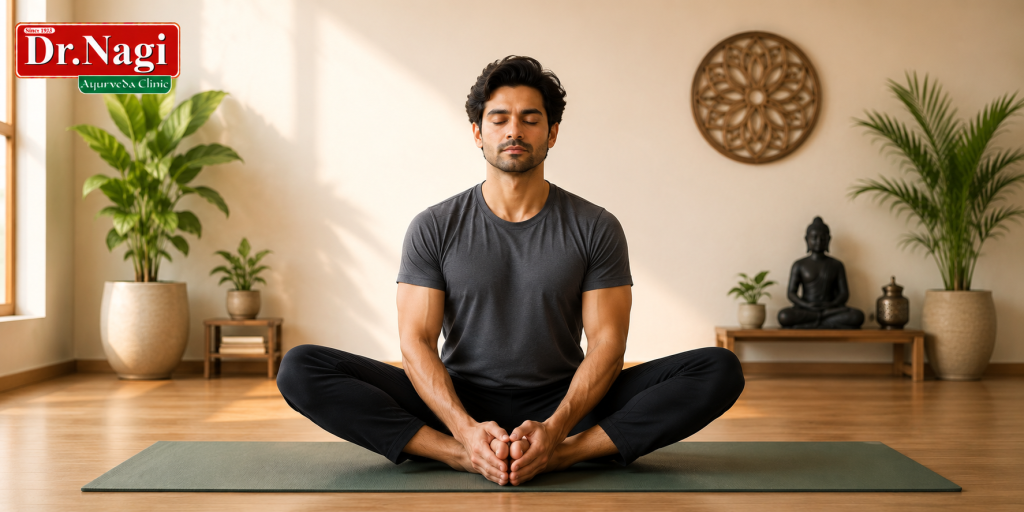
Baddha Konasana: How It Connects to Erectile Function
The inner groin holds chronic tension in most men who sit for work. That tension quietly restricts circulation to the reproductive tissue without any obvious symptom pointing there.
Baddha Konasana targets this area directly, and also creates compression and release around the prostate that improves local blood flow over time.
Few postures in yoga for erectile dysfunction are as anatomically specific to where blood restriction actually matters.
Steps
- Sit with soles of both feet pressed together and knees falling outward
- Hold the feet without forcing the knees toward the floor
- Sit tall and breathe slowly for one to two minutes
- Gently bounce the knees before releasing
Forcing the range of motion produces nothing useful. The opening develops through weeks of consistent relaxed practice.
Setu Bandhasana: How It Connects to Erectile Function
This posture works the pelvic floor, glutes, hip flexors, and lower back together. Blood flow into the pelvic region improves with each repetition.
The thyroid gets activated too, and thyroid function affects testosterone production in ways that quietly undermine sexual health when disrupted. Within yoga for erectile dysfunction, bridge pose does more in one movement than almost any other posture.
Steps
- Lie on the back, knees bent, feet flat and hip-width apart
- Press both feet down and lift the hips
- Contract the pelvic floor and glutes deliberately at the top
- Hold five to ten seconds, lower slowly, repeat ten to fifteen times
- Or hold the lifted position for thirty to sixty seconds
Adding a Kegel contraction at the top of each repetition compounds the benefit for erectile function specifically.
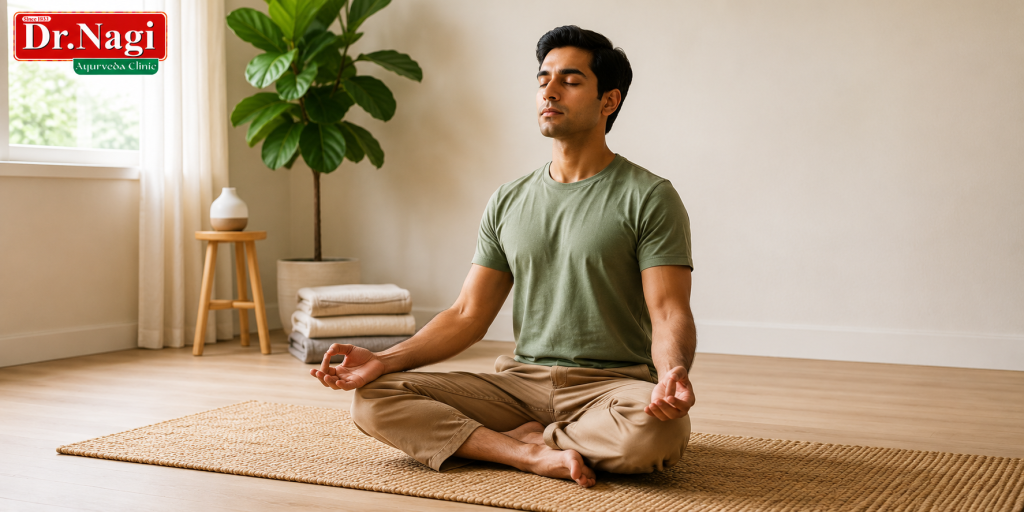
Ashwini Mudra: How It Connects to Erectile Function
This practice contracts and releases the anal sphincter and perineal muscles rhythmically. The pelvic floor builds strength directly, circulation improves in the perineal region.
The muscular control that holds and sustains erection during sex gets trained in a way that no other practice targets as specifically.
Ayurveda has prescribed Ashwini Mudra for male reproductive health for a very long time. In yoga for erectile dysfunction it remains one of the most direct tools available.
Steps
- Sit cross-legged or in Vajrasana
- Contract the anal and perineal muscles firmly for two to three seconds
- Release fully, the release matters as much as the contraction
- Pause two to three seconds and repeat
- Twenty to thirty repetitions twice daily, morning and before sleep
Four to six weeks of daily practice is where pelvic floor improvement becomes physically noticeable.
Dhanurasana: How It Connects to Erectile Function
Dhanurasana raises and invigorates the chest and at the same time activates the reproductive organs and the adrenal glands. The production of testosterone and the response to stress are controlled by adrenal activity, which lies at the heart of what defines men erectile capacity with age.
Ayurvedic clinical tradition has used this posture specifically for male sexual vitality for centuries.
Steps
- Lie face down, arms at the sides
- Bend both knees and grip the ankles from behind
- Inhale and lift the chest and thighs off the floor together
- Hold twenty to thirty seconds, breathing steadily
- Release slowly and repeat three to five times
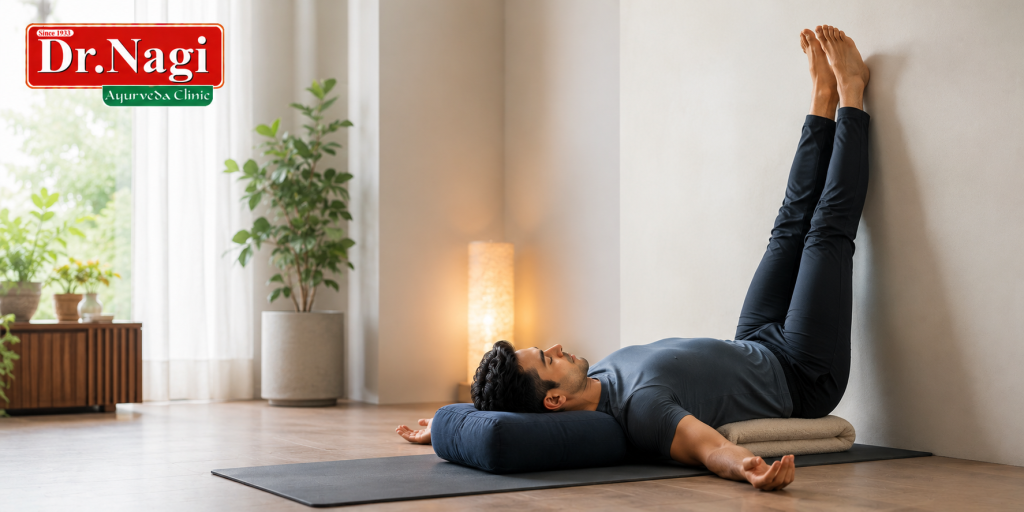
Viparita Karani: How It Connects to Erectile Function
This passive inversion requires no muscular effort. Blood drains from the legs back toward the core and pelvic region. The nervous system settles. Fatigue in the lower body clears. Circulation improves in the pelvic area without placing any demand on the body to produce it.
In yoga for erectile dysfunction this works best closing a practice session or used before sleep, when the nervous system calming has the most space to deepen.
Steps
- Sit sideways next to a wall and swing both legs up as the back lowers flat
- Legs rest vertical against the wall, arms beside the body with palms up
- Breathe naturally and stay five to fifteen minutes
- Roll to one side before sitting up slowly
Pranayama: Why Breath Cannot Be Left Out
Erection requires parasympathetic dominance. Shallow, fast, chest-based breathing keeps the sympathetic system running, which keeps blood vessels constricted in addition to arousal blocked at a physiological level before desire even enters the equation.
Yoga for erectile dysfunction practised without breathwork misses one of the most powerful levers available.
Daily breathing practices that build the right internal environment:
- Anulom Vilom alternates nostril breathing for five to ten minutes each morning. Balances nervous system function along with improved cardiovascular efficiency over consistent weeks of practice
- Bhramari a deep inhale followed by a long humming exhale. Drops cortisol, lowers blood pressure, quiets mental agitation. Five to seven rounds before sleep accumulates clear benefit over time
- Diaphragmatic breathing slows belly breathing, four to six counts in, six to eight counts out, for five to ten minutes daily. Over weeks this gradually shifts baseline nervous system tone toward the parasympathetic state in a durable way

About Dr. Nagi Clinic
Dr. Nagi Clinic in Ambala has been handling erectile dysfunction and sexual health concerns since 1937. Low confidence, early discharge, low stamina, premature ejaculation, phimosis, reduced desire, these come through the door here as ordinary medical problems.
No judgment. No embarrassment attached to the consultation. Individual assessment for every patient in addition to a treatment plan built around what is actually present in that case, not a protocol applied uniformly to everyone with the same complaint.
Dr. Nagi carries recognition as one of the best Ayurvedic sexologists in India, not from advertising but from nearly nine decades of uninterrupted family clinical practice.
Patients travel from Ambala along with surrounding areas including Yamunanagar, Patiala, Ludhiana, and Mandi Gobindgarh.
For men who cannot visit directly, drnagi.com/our-products holds Ayurvedic formulations made specifically for male sexual health, erectile function, stamina, desire, and hormonal balance, along with reproductive vitality.
Conclusion
As it treats the underlying biology, blood flow, nervous system tone, pelvic floor strength, and cortisol rather than just the symptom, yoga is effective in treating erectile dysfunction. Daily practice for eight to twelve weeks creates something durable. as combined with appropriate
Ayurvedic evaluation as necessary, the improvement is more likely to be long-lasting than reliant on ongoing medication.
Frequently Asked Questions (FAQs)
How long before yoga for erectile dysfunction shows a visible change?
Energy and anxiety typically shift within four to six weeks of daily practice. Actual improvement in erectile quality tends to show between eight and twelve weeks, when postures, breathwork, and pelvic floor work have accumulated enough together.
Which posture is most directly useful?
Setu Bandhasana and Ashwini Mudra together address the most relevant ground, pelvic floor strength, and muscular control, in addition to blood flow to the reproductive region.
Can yoga manage erectile dysfunction without other treatment?
For mild to moderate cases where lifestyle along with stress are primary drivers, yes, it addresses enough of the contributing causes to make a real difference.
Is breathwork as important as the postures?
Yes. Postures build circulation and muscular strength. Breathwork regulates whether the nervous system allows blood to actually flow where it needs to go.
Does combining yoga with Ayurvedic treatment improve outcomes?
Yes. Yoga handles physical and neurological dimensions. Ayurvedic treatment reaches the hormonal, constitutional, and deeper stress-response factors that physical practice alone cannot fully address.