

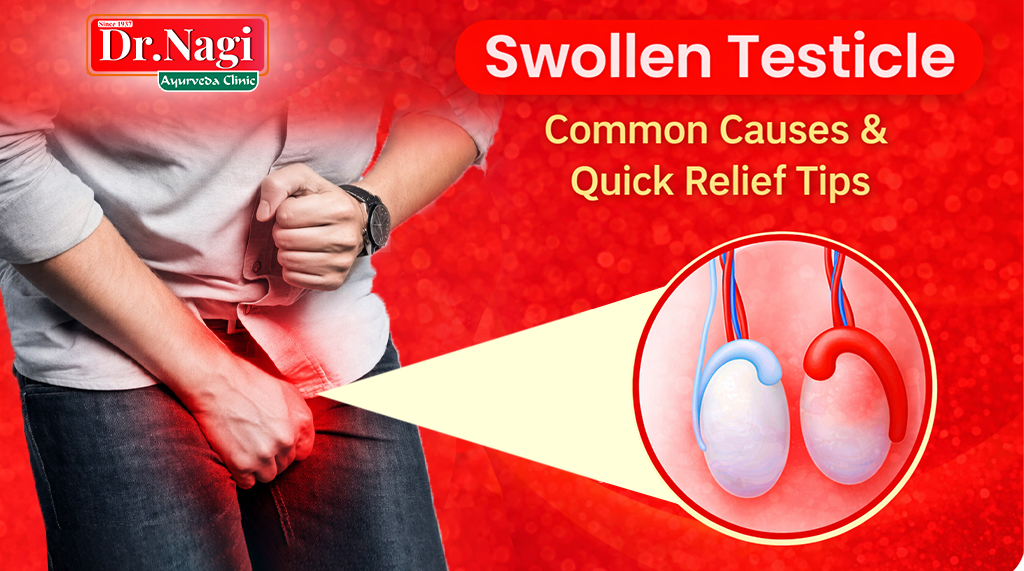
Finding a swollen testicle is the kind of discovery that stops you in your tracks. For most men, the immediate reaction is a mix of worry, embarrassment, and uncertainty — and more often than not, they choose to wait and hope it goes away on its own. But that decision, however understandable, can sometimes cost them dearly.
Swollen testicles — also referred to as scrotal swelling or testicular swelling — are larger than usual and may appear discoloured or shiny. The swelling can develop on one side or both, with or without pain, and the cause can range from something minor to something that demands emergency surgery within hours.
Whether you are noticing a swollen right testicle with pain, dealing with unexplained swelling of the testicles on the left side, or experiencing a general heaviness in the swollen scrotum, this guide walks you through everything you need to know — the causes, the warning signs, and what you can actually do about it.
What Is Testicular Swelling?
The testicles are small, egg-shaped reproductive glands placed in the scrotum — the skinny pouch of pores and skin at the back of the penis. They produce sperm and hormones, each of which play a critical function in male health, strength, and fertility.
Testicular swelling refers to any substantive expansion of 1 or each testicles, now and again followed through redness, a shiny look, a seen lump, or a dragging sensation. You might also experience difficulty urinating, nausea, vomiting, or discharge from the penis alongside the swelling.
The cause — not the symptom itself — determines how serious the situation is and what kind of treatment is needed.
Common Swollen Testicle Causes
1. Epididymitis — Infection of the Sperm-Carrying Tube
A common cause of a swollen testicle in men is epididymitis, which occurs when a small tube at the back of the testicle becomes inflamed and swollen.
It typically affects guys aged 14–35 and is often a result of infections like chlamydia, gonorrhoea, or a urinary infection that spreads.
Symptoms to look for:
- Gradual swelling of the testicles, usually on one side
- Warmth, redness, and tenderness in the swollen scrotum
- Pain or burning sensation when urinating
- Mild fever and general discomfort
This condition responds well to antibiotics, but only after a confirmed diagnosis from a healthcare provider.
2. Orchitis — When the Testicle Itself Becomes Inflamed
Orchitis is the inflammation of the testicle itself, causing pain and swelling in one or both testicles. The mumps virus, certain sexually transmitted infections, and urinary tract infections are common causes. It often appears alongside epididymitis, and when it develops on its own, the mumps virus is usually responsible. Unvaccinated men remain especially vulnerable — and when left unaddressed, orchitis can affect long-term fertility.
Key symptoms:
- Rapid swollen testicles, one or both sides
- Significant tenderness and pain
- Nausea, fever, and fatigue
- Sometimes accompanied by discharge
3. Testicular Torsion — A True Medical Emergency
This is the one cause where minutes genuinely matter. Testicular torsion occurs when the spermatic cord twists on itself, cutting off the blood supply to the testicle entirely. Without prompt surgical intervention, permanent damage — including loss of the testicle — can occur within just a few hours.
Emergency warning signs:
- Sudden, severe pain in one testicle
- Rapid testicular swelling developing within minutes
- Nausea and vomiting
- The testicle sitting higher than usual or at an abnormal angle
If this describes your situation right now, do not wait — go to the emergency room immediately. This is not something to manage at home.
4. Hydrocele — Painless Fluid Buildup
A hydrocele is one of the most common causes of a painless, swollen scrotum in men. It takes place while fluid accumulates across the testicle within the scrotal sac. The swelling is normally clean and smooth to touch, does not cause fever or discharge, and may get worse barely as the day progresses. Many hydroceles clear up on their own, even though chronic or massive ones might also require a minor surgical treatment.
5. Varicocele — Enlarged Scrotal Veins
Varicoceles are enlarged, twisted veins in the scrotum — similar to varicose veins inside the legs. They are especially common on the left side, which is why many men document a swollen left testicle with pain or a dull heaviness that worsens after prolonged standing or physical activity.
Signs include:
- A dragging ache in one testicle, often worse after exercise
- Visible or palpable enlarged veins beneath the scrotal skin
- One testicle appearing gradually smaller over time
6. Trauma or Injury
A blow to the private area from sports, an accident, or a fall can cause pain, swelling, and bruising in the testicle, and mild cases usually get better in 1–2 days with rest.
If the pain or swelling doesn’t improve after that, it’s important to see a doctor to check for any serious problem.
How Do I Treat a Swollen Testicle at Home?
If you are asking “how do I treat a swollen testicle at home,” the sincere answer is that domestic care is suitable most effective for moderate, non-emergency cases at the same time as you arrange a professional consultation. It should by no means replace a proper analysis.
Here are safe, practical steps for temporary relief:
- Cold Compress: Apply an ice pack. Wrap in a towel or cloth and apply to the area for 15–20 minutes at a time. Never place ice on the skin at once. Repeat every few hours for the duration of the first 24 hours to assist in reducing swelling.
- Supportive Underwear: Fitted briefs or an athletic supporter minimise needless movement and provide structural support during the day.
- Rest: Avoid physical activity until your signs and symptoms have stabilised, or you’ve been seen by a sex specialist doctor.
Support Your Recovery with Ayurvedic Wellness
Healing from testicular swelling isn’t just about treating the symptom — it’s far about restoring stability in your body from the internal out. While scientific remedy addresses the instant reason, your long-time period reproductive fitness, immunity, and power deserve identical interest. This is in which Ayurveda steps in — now not as a shortcut, however as a time-tested device of care that works together with your body’s herbal rhythm.
At Dr. Nagi Clinic, trusted since 1937, a carefully curated range of Ayurvedic formulations are designed to support exactly that within. These are not quick fixes. They are the kind of steady, wholesome support your body needs to truly thrive.
- Pushkara Gold – It enables restore vigor and power the usage of amazing herbs and bhasmas referred to as supreme rasayanas.
- Spermogen – One hundred twenty strengthens the male reproductive system with 15 effective herbs such as Ashwagandha, Shilajit, and Shatavari — supporting sperm fitness and average fertility.
- Chyawanprash – Rich in Vitamin C and antioxidants, helps each day immunity and strength — assisting your frame recover and rebuild from within. These aren’t short fixes. They are the sort of regular, healthy aid your body needs to virtually thrive.
Explore more here: https://drnagi.com/our-products/
When to See a Doctor Immediately
Never ignore pain or swelling in your testicles. Some of the conditions behind swollen testicles are genuine medical emergencies. Seek immediate help if you experience:
- Sudden or severe testicular swelling with intense pain
- Swelling that developed rapidly within minutes
- High fever alongside a swollen scrotum
- A hard lump inside or on the testicle
- Nausea and vomiting together with testicular pain
- No improvement after 48–72 hours of home care
A healthcare provider will review your medical history, perform a physical exam, and may recommend tests like a urin alysis or ultrasound. Some causes — particularly testicular torsion — require immediate surgery.

About Dr. Nagi Clinic — Trusted Since 1937
At Dr. Nagi Clinic, sexual health is treated as a completely normal part of overall wellbeing — not something to be ashamed of or ignored. Since 1937, the clinic has provided trusted Ayurvedic treatments for issues like low confidence, premature ejaculation, low stamina, phimosis, and reduced desire — with a firm focus on privacy, safety, and lasting improvement rather than temporary relief.
If you are looking for the best sexologist in India who combines decades of scientific revel in with time-honoured Ayurvedic knowledge, Dr. Nagi Clinic is a name generations of sufferers have trusted. The head office is located in Ambala, with branch clinics regularly serving patients across Yamunanagar, Patiala, Ludhiana, and Mandi Gobindgarh.
Final Thoughts
A swollen testicle needs to in no way be written off without information about what’s behind it. Whether you are coping with a swollen right testicle with pain from an damage, slow swelling of the testicles from an infection, or a painless swollen scrotum that regarded without warning — the proper facts and timely care can defend your fitness, your fertility, and your peace of mind. Listen on your frame, take the symptoms significantly, and when in doubt, continually consult a certified sex specialist doctor like Dr Nagi.
Frequently Asked Questions (FAQs)
What does a swollen testicle feel like?
A swollen testicle may feel larger, heavier, or tender than usual. Some men also notice visible redness, a shiny appearance, or a dull dragging sensation in the scrotum.
Can a swollen testicle go away on its own?
Mild swelling from a minor injury may resolve within a few days on its own. However, swelling caused by infection, varicocele, or torsion always requires proper medical treatment.
Is a swollen testicle always painful?
No — not every case of testicular swelling comes with pain. A hydrocele, for example, causes painless scrotal swelling, while testicular torsion brings sudden and severe pain almost instantly.
How long does a swollen testicle last?
Infection-related swelling treated with antibiotics may begin improving within a week. Swelling from an injury can take anywhere from a few days to two weeks to fully settle.
Should I go to the ER for a swollen testicle?
Yes — if swelling appeared suddenly with intense pain, nausea, or vomiting, go to the emergency room immediately. These are classic signs of testicular torsion, which is a time-sensitive medical emergency.