

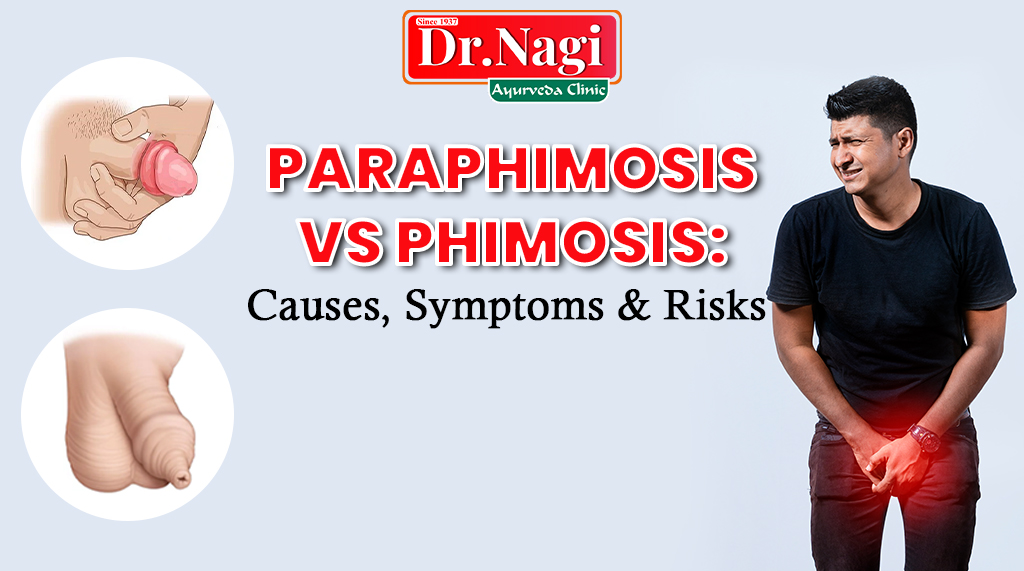
If you’ve experienced tightness or discomfort, or even a problem with your skin, it could be related to paraphimosis or phimosis. Although these signs may appear similar, they’re different and knowing the difference can be essential for your sexual health and general well-being.
Dr Nagi clinic, we’ve helped a lot of men from Ambala, Ludhiana, Patiala, Yamunanagar, and Mandi Gobindgarh beat these ailments using safe natural Ayurvedic treatments paired with modern medical treatments. This guide will assist you in understanding the two conditions, identify the signs, and understand when you should seek assistance.
What is Phimosis?
Phimosis is a condition where the foreskin isn’t in a position to let it be pulled back on the head of the penis (glans). Imagine wearing a sloppy turtleneck that’s too small. It’s simply too big to wear in a comfortable manner.
The condition is common condition that affects infants and children. In reality most males have the skin which is tight. It loses its elasticity over time. If it continues to persist until you reach adulthood or gets worse later in your lifetime, it can affect your sexual health and intimacy.
Phimosis Symptoms: What to Look For
Phimosis symptoms can range from mild to severe:
Mild Symptoms:
- Slight tightness when trying to retract foreskin
- No pain in daily activities
- Normal urination
Moderate Symptoms:
- Discomfort during erections
- Difficulty cleaning properly
- Pain during sexual activity
- Ballooning of foreskin when urinating
Severe Symptoms:
- Complete inability to retract foreskin
- Pain during sex or masturbation
- Recurrent infections with redness and swelling
- Bleeding or small tears in the foreskin
- Difficulty urinating or weak urine stream
What Causes Phimosis?
Understanding the cause helps in choosing the right treatment:
- Normal development – Natural tight foreskin that loosens with age
- Forced retraction – Damage from pulling foreskin back too early
- Poor hygiene practices – Leading to infections and scarring
- Repeated infections – Balanitis (inflammation of the glans) causes scarring
- Skin conditions – Lichen sclerosus creates white patches and tightening
- Diabetes – High blood sugar increases infection risk and slower healing
- Poor hygiene – Not cleaning under foreskin regularly
- Injury or trauma – Aggressive sexual activity or accidents
- Aging – Natural changes in skin elasticity
What is Paraphimosis?
Paraphimosis occurs when the foreskin gets stuck behind the head of the penis and cannot be pulled back to its normal position. It’s like a tight rubber band stuck behind the penis head, cutting off blood flow.
Why This is Serious
When foreskin is trapped:
- Blood flow to the penis head gets restricted
- Glans swells rapidly and becomes painful
- Tissue can die (necrosis) within hours without treatment
- Can lead to permanent damage or loss of tissue
Paraphimosis Symptoms: Emergency Warning Signs
SEEK IMMEDIATE HELP IF YOU HAVE:
- Foreskin stuck behind penis head and won’t move forward
- Severe swelling of the glans (penis head)
- Penis head turning dark red, purple, or blue
- Intense, throbbing pain
- Unable to urinate or extreme difficulty
- Cold sensation in the penis
What Causes Paraphimosis?
Paraphimosis usually happens when foreskin is retracted and not properly returned. Common causes:
Sexual Activity
- Foreskin pulled back during sex
- Forgetting to return it to normal position
- Falling asleep without repositioning
Personal Care
- Prolonged retraction while bathing
- First-time attempts to pull back foreskin
- Cleaning the penis
Underlying Phimosis
- Having tight foreskin increases risk
- Difficult to return foreskin after retraction
The Critical Differences: Paraphimosis vs Phimosis
Let me make this crystal clear:
Foreskin Position
- Phimosis: Foreskin stuck FORWARD (won’t retract backward)
- Paraphimosis: Foreskin stuck BEHIND (won’t come forward)
Urgency Level
- Phimosis: Schedule an appointment within days/weeks
- Paraphimosis: GO TO EMERGENCY ROOM NOW
Pain and Swelling
- Phimosis: Mild discomfort, minimal swelling
- Paraphimosis: Severe pain, dramatic swelling
Blood Flow
- Phimosis: Normal blood circulation
- Paraphimosis: Restricted blood flow (like a tourniquet)
Impact on Sexual Health
- Phimosis: Discomfort during sex, reduced pleasure, anxiety
- Paraphimosis: Cannot have sex, medical emergency
Treatment Timeline
- Phimosis: 4-12 weeks of conservative treatment
- Paraphimosis: Must be treated within hours
Can It Fix Itself?
- Phimosis: Sometimes (especially in children)
- Paraphimosis: NEVER – always requires medical intervention
Memory aid: Think of a swollen, dark purple penis head with severe pain = paraphimosis = EMERGENCY. Everything else = phimosis = schedule appointment.
How These Conditions Affect Your Sexual Health
Phimosis Impact on Intimacy
Physical Effects:
- Pain during penetration
- Difficulty maintaining erection due to discomfort
- Premature ejaculation (to avoid prolonged discomfort)
- Risk of small tears during sex (painful and scary)
- Recurrent infections affecting sexual activity
Emotional Impact:
- Anxiety about sexual performance
- Embarrassment about appearance
- Avoiding intimacy with partner
- Relationship strain
- Loss of sexual confidence
- Depression in some cases
Partner Impact:
- Confusion about your reluctance for intimacy
- Feeling rejected or unattractive
- Frustration with incomplete sexual encounters
Good news: All these issues resolve with proper treatment. Men report significant improvement in sexual confidence and relationship satisfaction after successful phimosis treatment.
Similar to how erectile dysfunction and premature ejaculation affect intimate relationships, phimosis can create unnecessary stress. The solution is seeking timely, professional help.
Paraphimosis Impact
Because it’s an emergency:
- Complete halt to sexual activity
- Fear and trauma from the incident
- Anxiety about recurrence
- Temporary or permanent erectile dysfunction if not treated quickly
- Psychological impact of emergency treatment
Prevention: Protecting Your Sexual Health
Daily Foreskin Care
Proper Hygiene (For Phimosis Prevention):
- Gently retract foreskin during bathing (only if it moves easily)
- Clean with warm water (mild soap optional)
- Rinse thoroughly
- Dry completely
- ALWAYS return foreskin to normal position
What to Avoid:
- Never force retraction (can cause tears and scarring)
- Avoid harsh soaps (can irritate sensitive skin)
- Don’t over-clean (natural oils are protective)
- Never leave foreskin retracted
Sexual Activity Safety
To Prevent Paraphimosis:
- Use adequate lubrication during sex
- Be gentle with foreskin during intimacy
- Check foreskin position after sex (before sleeping)
- If using condoms, ensure proper fit
- Communicate with partner about care needs
To Manage Phimosis During Sex:
- Use plenty of lubricant
- Start slowly and gently
- Stop if pain occurs
- Try different positions that reduce pressure
- Consider wearing condom for extra glide
For Men with Diabetes
If you have diabetes or prediabetes:
- Control blood sugar levels (reduces infection risk)
- Extra attention to genital hygiene
- Treat infections immediately
- Regular check-ups with Dr. Nagi
- Follow Ayurvedic diet to manage diabetes
Diabetes significantly increases risk of both phimosis and paraphimosis. At Dr Nagi’s clinic, we address both sexual health and diabetes management together using Ayurvedic approaches.
Why Choose Dr Nagi for Phimosis/Paraphimosis Treatment?
87+ Years of Family Expertise
Dr Nagi represents the 3rd generation of Ayurvedic sexual health specialists. This isn’t just a job—it’s a legacy of helping men regain confidence and intimate health.
Our Unique Approach
1. Root Cause Treatment
- We don’t just treat symptoms
- Identify underlying issues (diabetes, hygiene, skin conditions)
- Holistic healing for lasting results
2. Natural Ayurvedic Methods First
- 75-85% success without surgery
- No side effects from harsh chemicals
- Body-friendly herbal medicines
- Customized to your constitution
3. Modern + Traditional
- Combining best of both worlds
- Advanced diagnostics
- Time-tested Ayurvedic treatments
- Surgical options when needed
4. 100% Confidential
- Private consultation rooms
- Discreet appointments
- No judgment, only professional care
- Your privacy is sacred
5. Proven Success
- 1 Million+ patients treated
- Thousands of successful phimosis treatments
- High patient satisfaction
- Real results, not false promises
Convenient Locations
Main Clinic – Ambala
Branch Clinics:
- Ludhiana
- Mandi Gobindgarh
- Patiala
- Yamunanagar
Take Action Today
Paraphimosis vs phimosis are two common conditions that can seriously affect you sexual well-being, confidence and relationships. The positive side is that both conditions are treated with the proper treatment.
Do not let embarrassment stop you from seeking help. Thousands of men in Ambala, Ludhiana, Patiala, Yamunanagar, and Mandi Gobindgarh have overcame these challenges in the Dr. Nagi’s medical clinic.
Your sexual health matters. Your relationships matter. Your confidence matters.
Don’t wait—take the first step toward recovery today. Book your appoitment today.
Frequently Asked Questions
Can phimosis turn into paraphimosis?
Yes, if you have tight foreskin (phimosis) and forcefully retract it, it can get stuck behind the glans, causing paraphimosis. This is why you should never force retraction and should seek proper treatment for phimosis rather than trying to “fix it yourself.”
How long does phimosis treatment take to work?
With Dr. Nagi’s Ayurvedic treatment:
- Mild cases: 4-6 weeks improvement
- Moderate cases: 8-10 weeks
- Severe cases: 10-12 weeks or may need surgery
Results vary based on severity, age, and consistency with treatment. Most men see noticeable improvement within the first month.
Will I need circumcision for phimosis?
Not necessarily. About 75-85% of our phimosis patients improve with Ayurvedic treatment without surgery. Circumcision is recommended only if:
- Conservative treatment fails after 10-12 weeks
- You have severe scarring (lichen sclerosus)
- Recurrent infections despite treatment
- You prefer permanent solution
- You’ve had paraphimosis emergency
Can paraphimosis happen again after treatment?
Yes, if you still have tight foreskin (underlying phimosis), paraphimosis can recur. This is why many doctors, including Dr. Nagi, recommend preventive circumcision after a paraphimosis emergency. If you choose not to have surgery, you must be extremely careful about always returning foreskin to normal position.
One Response