


Male infertility is more common than most people realise. It happens when a man’s sperm can’t properly reach to or fertilise a woman’s egg. According to the figures, 1 out of 6 couples cannot have children, and the man’s side is to blame in 40% of cases. The good news is that most cases can be treated successfully. Dr. Nagi is a reliable male infertility specialist who has had the privilege to make a lot of men happy with fatherhood. His clinics, where he provides services, are located in Ambala, Yamunanagar, Ludhiana, Patiala, and Mandi Gobindgarh.
What Male Infertility Really Means
Male infertility is basically when the male body is unable to produce sperm that are able to fertilise an egg. For sperm to be effective, there should be the right quantity, good motility, correct shape, and strong DNA. It is not always the case that there is a low sperm count. There are situations in which sperm may appear to be normal, but they do not have good motility or they have some kind of invisible damage. Dr. Nagi, a trusted male infertility specialist in Ambala, explains that early testing makes all the difference. Many men don’t realise they have this issue until they try for a baby for a year without success.
Why Male Infertility Happens So Often
Around the world, 15% of couples face trouble conceiving. Men contribute to about 40% of these problems. In India, rising stress, poor diet, smoking, diabetes, and pollution make it worse. But there’s hope – 80-90% of cases improve with the right care. Dr Nagi has treated thousands using a mix of modern tests and natural methods. His patients often see results within 3-6 months.
Common Signs and Symptoms of Male Infertility
Male infertility often shows no obvious signs, making it hard to spot. Some men notice changes in sexual function first. They might struggle to get or keep an erection, finish too quickly during sex, or feel low sex drive. Physical clues include pain or swelling in the testicles or testicles that feel small or uneven. Other hints include constant tiredness, hair loss, less body hair, or trouble peeing due to repeated infections. If you and your partner have tried for a baby for 12 months without luck – or 6 months if she’s over 35 – it’s time to check. Dr Nagi’s clinics offer quick, private tests to find out what’s wrong.
Main Causes of Male Infertility
Approximately 50% of male infertility situations are due to health problems. The main one is a varicocele, i.e., abnormal enlargement of veins in the scrotum. Inflammation of the penis, prostate, or testicles can also harm sperm. Deficiency of hormones such as testosterone, diabetes, thyroid disorders, or genetic problems has a significant impact as well. The sperm’s way is hindered by blocked tubes due to past injuries or operations.
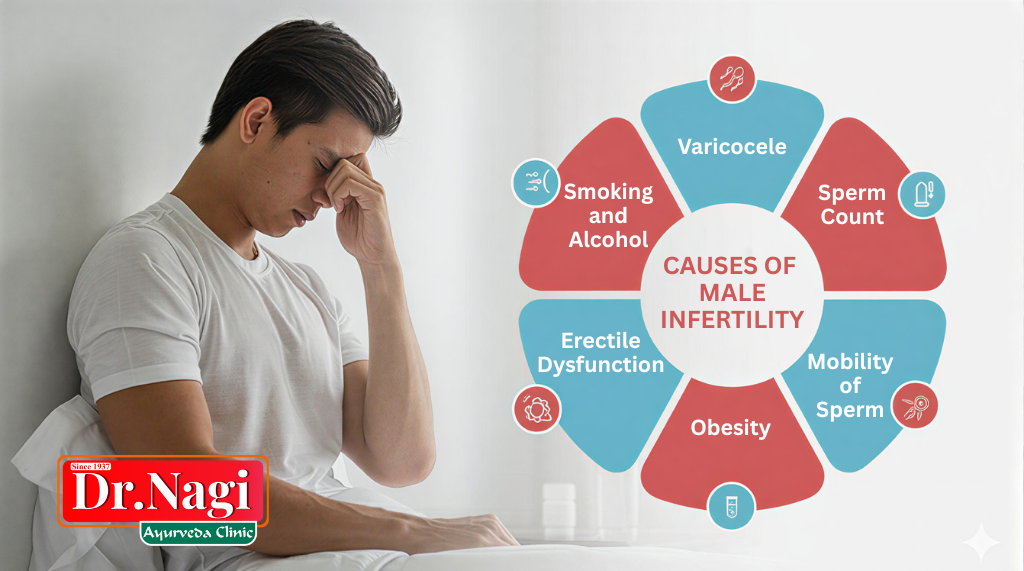
Lifestyle can also be a factor – smoking and heavy drinking can cause mutations in sperm DNA, while being overweight or getting too hot can slow down the production. After 40 years of age, which is when sperm quality lowers, age is still a factor. Chemicals from pollution or work add risk. Stress and poor sleep make everything worse. A good male infertility specialist like Dr. Nagi finds and fixes the real cause.
Tests for Male Infertility Explained Simply
Tests for male infertility start with a sperm count test (semen analysis), the most important one. It checks sperm count, movement, shape, volume, and pH. Normal results show 15 million or more sperm per ml, with 40% swimming forward and 4% properly shaped. Blood tests measure hormones like testosterone. Ultrasound looks for swollen veins, blockages, or testicle problems. Genetic tests spot inherited issues. Advanced checks, like DNA fragmentation, measure sperm damage.
Treatment Options for Male Infertility
Treatment matches the cause. Lifestyle changes come first and work for many. Lose extra weight, eat zinc-rich foods like nuts and eggs, quit smoking, wear loose cotton underwear, and walk 30 minutes daily. Sleep well and manage stress with yoga. Medicines help too – hormone therapy boosts low levels, antibiotics clear infections, and vitamins like CoQ10 improve sperm. Surgery fixes varicoceles with 60-70% success or opens blocked tubes. For tough cases, IUI places sperm near the egg, while IVF/ICSI injects sperm directly. Dr. Nagi blends modern care with Ayurveda using safe herbs like Ashwagandha and Shilajit. No side effects, lasting results.

Why Dr Nagi Stands Out as a Male Infertility Specialist
Dr. Nagi is a trusted male infertility specialist in Ambala with more than 87+ years of family expertise. He treats the root problem, not just symptoms. Thousands of couples have succeeded naturally through his care. His clinics offer private, confidential service.
Clinic Locations:
Ambala (main clinic), Yamunanagar, Ludhiana, Patiala, Mandi Gobindgarh.
Daily Habits That Boost Fertility
In order to get zinc and vitamins, you may consume walnuts, pumpkin seeds, spinach, and eggs.
- Try to remain cool; do not place a laptop on your lap or take a hot bath.
- Engage in moderate exercise, but make sure you get 7-8 hours of sleep.
- Eliminate your stress by using the deep breathing technique.
- Stay away from smoking, drugs, and the wearing of tight clothes.
Related Sexual Health Topics
Premature Ejaculation: Causes, Symptoms and Solutions
Men’s Sexual Health: Problems, Natural Tips & Expert Care
Phimosis: Causes, Stages & Treatment Options
Nightfall Good or Bad: Benefits, Exercises & Remedies
Take Action Today
Male infertility is a typical situation that can be fixed. Please do not overlook the indications and manifestations of male infertility. Learn about the reasons for male infertility, have male infertility tests, and consider male infertility treatment methods.
Contact Dr. Nagi now at his clinics in Ambala or nearby cities like Yamunanagar, Ludhiana, Patiala, Mandi Gobindgarh. Start your journey to fatherhood today!
FAQs About Male Infertility
1. How do I know if I have male infertility?
No baby after 1 year of trying. A simple semen test tells you.
2. Can lifestyle changes fix it?
Yes, 30-40% improve with better diet, exercise, and no smoking.
3. What is normal sperm count?
15 million+ per ml with good movement and shape.
4. Does age affect men too?
Yes, sperm weakens after 40 years old.
5. Where to find male infertility specialist in Ambala?
Dr. Nagi’s clinics in Ambala, Yamunanagar, Ludhiana, Patiala, Mandi Gobindgarh.
6. Can natural treatments work?
Yes, Ayurveda herbs plus lifestyle boost sperm safely.
7. How long until results?
3-6 months for most men.
3 Responses